
Kami (Shinto deity)
Izanagi no Ōkami
伊邪那岐大神
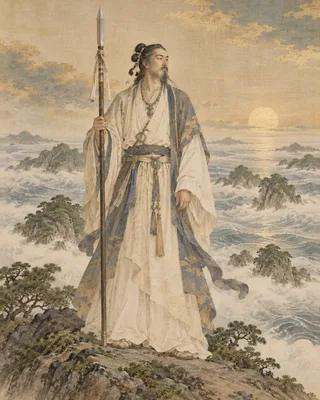
In the Kojiki, paired with Izanami no Kami, he takes on the role of shaping the land and giving birth to the islands and the kami. Ise Jingū also introduces Izanagi no Mikoto and Izanami no Mikoto as the kami who gave birth to the land and to nature.
This page introduces myths and the faith handed down at individual shrines, with their sources. Descriptions of divine virtues are explanations within religious faith and do not guarantee the outcome of any prayer. We do not set uniform rules for the traditions or customs of individual shrines and temples.
English pages are the site’s own translations of its Japanese pages. The sources cited are in Japanese. 日本語で読む
The birth of the land and the kami
In the Kojiki, paired with Izanami no Kami, he takes on the role of shaping the land and giving birth to the islands and the kami. Ise Jingū also introduces Izanagi no Mikoto and Izanami no Mikoto as the kami who gave birth to the land and to nature.
Source: 國學院大學・伊勢神宮
Prayers to the parent kami of life
Taga Taisha enshrines Izanagi no Ōkami and Izanami no Ōkami together and introduces faith in long life, the forming of bonds, and warding off misfortune. This reflects the shrine's tradition of prayer, which reveres the two kami as the parent kami of life.
Source: 多賀大社
Returning from Yomi and performing misogi
There is a story in which he goes to Yomi in pursuit of the deceased Izanami no Kami and, after his return, performs misogi (ritual purification). In the Kojiki, many kami are born from this purification, and the Three Noble Children, Amaterasu Ōmikami, Tsukuyomi no Mikoto, and Susanoo no Mikoto, appear.
Source: 國學院大學
An example of a chant (in Japanese)
祓え給い、清め給え、神(かむ)ながら守り給い、幸(さきわ)え給え
Related shrines and temples
- Isasumi JinjaAizumisato, Fukushima Prefecture
- Oyama Jinja Maetate ShadanTateyama, Toyama Prefecture
- Shirayamahime JinjaHakusan, Ishikawa Prefecture
- Taga TaishaTaga, Shiga Prefecture
- Hikosan JingūSoeda, Fukuoka Prefecture
- Wakeoe JinjaKita Ward, Nagoya, Aichi Prefecture
- Oyama JinjaTateyama, Nakaniikawa District, Toyama Prefecture
- Umi HachimangūUmi, Kasuya District, Fukuoka Prefecture
- Niukawakami JinjaHigashiyoshino, Yoshino District, Nara Prefecture
- Haguro Jinja (Suzu)Suzu, Ishikawa Prefecture
- Hakusan Jinja (Kuroda, Ichinomiya)Ichinomiya, Aichi Prefecture
- Futahashira JinjaIzumi, Sendai, Miyagi Prefecture
- Tsukubasan JinjaTsukuba, Ibaraki Prefecture
- Sakuragi JinjaNoda, Chiba Prefecture
- Imado JinjaTaitō, Tokyo
- Ōji JinjaKita, Tokyo
- Tamaki JinjaTotsukawa, Yoshino District, Nara Prefecture
- Kamine JinjaHitachi, Ibaraki Prefecture
- Ōji Jinja (Midori, Yokohama)Midori, Yokohama, Kanagawa Prefecture
- Kasuga Jinja (Yokosuka)Yokosuka, Kanagawa Prefecture
- Suzuka MyōjinjaZama, Kanagawa Prefecture
- Ena JinjaNakatsugawa, Gifu Prefecture
- Shiroyama HachimangūChikusa, Nagoya, Aichi Prefecture
- Sugawara JinjaIga, Mie Prefecture
- Isasa JinjaKusatsu, Shiga Prefecture
- Haritsuna JinjaInuyama, Aichi Prefecture
Sources (in Japanese)
- 國學院大學「伊耶那岐神」(2026-10-15 確認)
- 伊勢神宮「域外の別宮」(2026-10-15 確認)
- 多賀大社「多賀大社について」(2026-10-15 確認)
- 國學院大學「古事記ビューアー・神名データベース「伊耶那岐神」」(2026-10-15 確認)