
Kami (Shinto deity)
Amaterasu Ōmikami
天照大御神
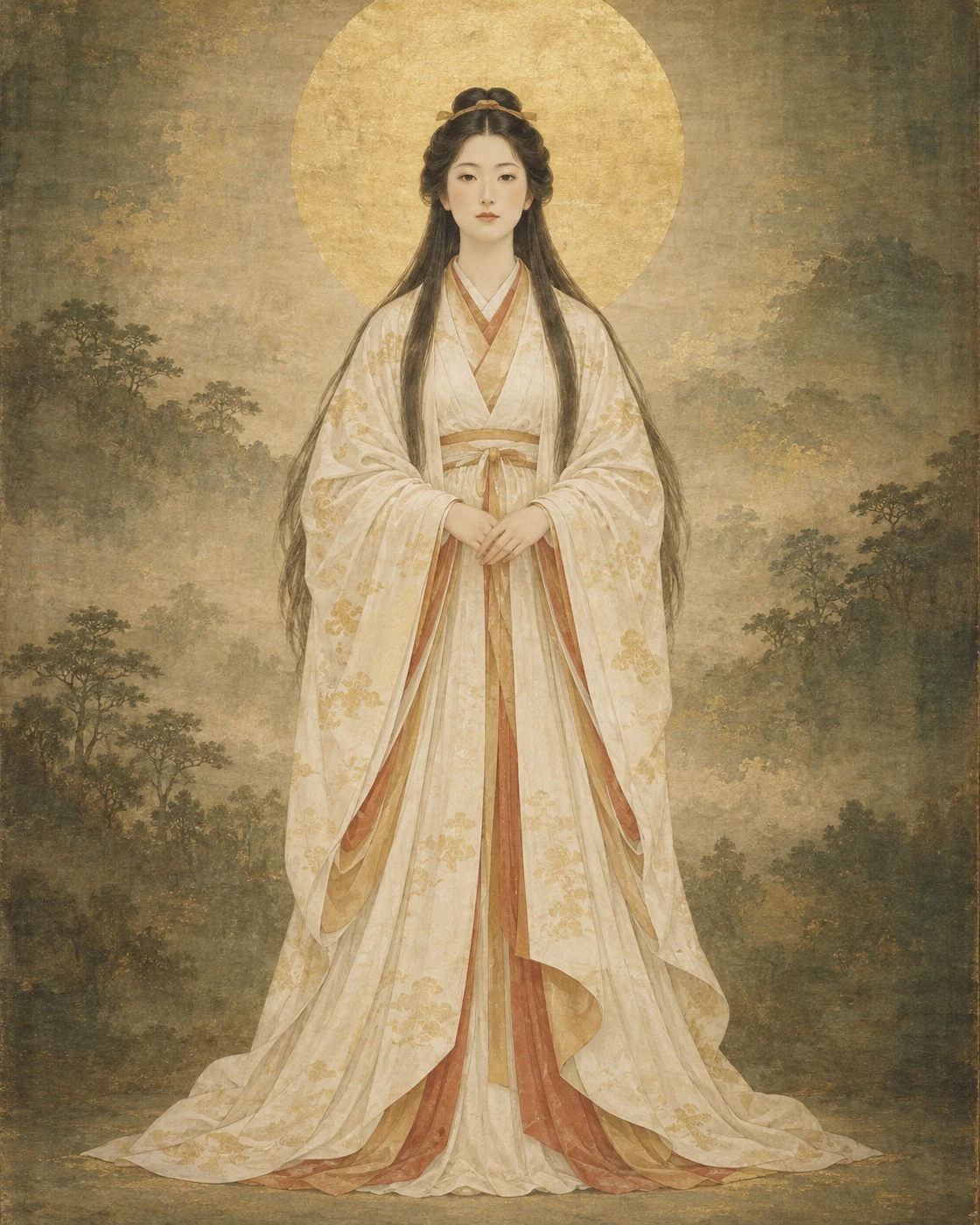
In Japanese mythology, Amaterasu Ōmikami stands at the center of the kami of Takamagahara and is the kami who conveys the blessings of light and rice cultivation to the earthly world. At the Naikū (Inner Shrine) of Ise Jingū she is enshrined as the ancestral kami of the imperial family, and she has long been widely revered.
This introduction is based on information from Ise Jingū. It does not make the rites or customs handed down at shrines in different places uniform.
English pages are the site’s own translations of its Japanese pages. The sources cited are in Japanese. 日本語で読む
A kami of light and of the blessings that nurture life
Ise Jingū likens the workings of Amaterasu Ōmikami to the sun that shines on all things. In the myths, Takamagahara has rice paddies and places for weaving, and Amaterasu Ōmikami is also connected with the work of providing food and clothing. She is a kami who offers a way to think not only about brightness but also about the blessings that make everyday life possible.
Source: 伊勢神宮・伊勢神宮
The prayers associated with her
In the rites of Ise Jingū, prayers are offered for abundant harvests of the five grains, the peace of the nation, and the continued prosperity of the imperial family. Reverence for Amaterasu Ōmikami brings together gratitude for the blessings that sustain daily life and the wish for a peaceful world. The divine virtues and blessings mentioned here are an introduction to faith as it has been handed down.
Source: 伊勢神宮
Light returns from the Ama no Iwato rock cave
In the Ama no Iwato myth as presented by Ise Jingū, Amaterasu Ōmikami, after suffering the violent conduct of her younger brother Susanoo no Mikoto, shuts herself inside the rock cave, and the world falls dark. The kami prepare a mirror and magatama beads, and Ame no Uzume no Mikoto performs a dance. When Amaterasu Ōmikami hears laughter and peeks out of the cave, Tajikarao no Kami brings her outside, and light returns to the world. This story of the kami joining their strength is handed down as a myth that tells of the blessings of the sun and the restoration of order.
Source: 伊勢神宮
The descent of the heavenly grandson and the entrusted ears of rice
It is told that Amaterasu Ōmikami gave the Three Sacred Treasures to her grandson Ninigi no Mikoto and sent him down to the earthly world. The story of the ears of rice found in Ise Jingū's explanations is that, at that time, she entrusted him with growing the rice of heaven on earth as well. Here the connection between her character as a kami of light and the rice cultivation that feeds people can be seen.
Source: 伊勢神宮
How she came to be enshrined at Ise
The shrine's history relates that Yamatohime no Mikoto traveled to many places in search of somewhere outside the imperial palace to enshrine Amaterasu Ōmikami. The account of how Ise became the place of her enshrinement is presented as a tradition based on the Nihon Shoki. It is important to read the dates given in myths and shrine histories separately from the history of pilgrimage to the shrine as traced through historical records.
Source: 伊勢神宮
An example of a chant (in Japanese)
祓え給い、清め給え、神(かむ)ながら守り給い、幸(さきわ)え給え
Related shrines and temples
- Ise Jingū Naikū (Kōtai Jingū)Ise, Mie Prefecture
- Atsuta JingūNagoya, Aichi Prefecture
- Nishinomiya JinjaNishinomiya, Hyōgo Prefecture
- Takabe JinjaMinamibōsō, Chiba Prefecture
- Yokoyama HachimangūMiyako, Iwate Prefecture
- Ōnominato JinjaKanazawa, Ishikawa Prefecture
- Mononobe JinjaŌda, Shimane Prefecture
- Kono JinjaMiyazu, Kyoto Prefecture
- Kada Kasuga JinjaWakayama, Wakayama Prefecture
- Hachiman Kamado JinjaBeppu, Ōita Prefecture
- Hotaka JinjaAzumino, Nagano Prefecture
- Wakeoe JinjaKita Ward, Nagoya, Aichi Prefecture
- Isebe Kakimoto JinjaKainan, Wakayama Prefecture
- Komagata JinjaŌshū, Iwate Prefecture
- Hirota JinjaNishinomiya, Hyōgo Prefecture
- Takaoka Sekino JinjaTakaoka, Toyama Prefecture
- Ōhirasan JinjaTochigi, Tochigi Prefecture
- Unomori JinjaYokkaichi, Mie Prefecture
- Ise JinjaKita Ward, Okayama, Okayama Prefecture
- Niu Kanshōbu JinjaKudoyama, Ito District, Wakayama Prefecture
- Kaiseizan DaijingūKōriyama, Fukushima Prefecture
- Aoshi JinjaNagaoka, Niigata Prefecture
- Shinkotoni JinjaKita, Sapporo, Hokkaido
- Kamikawa JinjaAsahikawa, Hokkaido
- Nagayama JinjaAsahikawa, Hokkaido
- Tōkyō DaijingūChiyoda, Tokyo
- Shinkawa DaijingūChūō, Tokyo
- Shiba DaijingūMinato, Tokyo
- Yoyogi HachimangūShibuya, Tokyo
- Ōji JinjaKita, Tokyo
- Tomioka Hachimangū (Kanazawa Ward, Yokohama)Kanazawa, Yokohama, Kanagawa Prefecture
- TenjinshaYokosuka, Kanagawa Prefecture
- Isehara DaijingūIsehara, Kanagawa Prefecture
- Yohashira JinjaMatsumoto, Nagano Prefecture
- Ōmiya Sengen JinjaInuyama, Aichi Prefecture
- Mikane JinjaNakagyō, Kyoto, Kyoto Prefecture
- Tamaki JinjaTotsukawa, Yoshino District, Nara Prefecture
- Yamaguchi DaijingūYamaguchi, Yamaguchi Prefecture
- Matsubara JinjaKagoshima, Kagoshima Prefecture
- Shinzan JinjaOga, Akita Prefecture
- Fukushima-ken Gokoku JinjaFukushima, Fukushima Prefecture
- Okamura TenmangūIsogo, Yokohama, Kanagawa Prefecture
- Kikuna JinjaKōhoku, Yokohama, Kanagawa Prefecture
- Mizonokuchi JinjaTakatsu, Kawasaki, Kanagawa Prefecture
- Kasuga Jinja (Yokosuka)Yokosuka, Kanagawa Prefecture
- Shirahata JinjaFujisawa, Kanagawa Prefecture
- Ōma JinjaKumano, Mie Prefecture
- Sugawara JinjaIga, Mie Prefecture
- KinsatsugūFushimi, Kyoto, Kyoto Prefecture
- Tsuyu no TenjinshaKita, Osaka
- Ōmiya Hachimangū (Miki)Miki, Hyōgo Prefecture
- Kōchi DaijingūKōchi, Kōchi Prefecture
- Ōmi JinjaHyūga, Miyazaki Prefecture
- Ishiura JinjaKanazawa, Ishikawa Prefecture
Sources (in Japanese)
- 伊勢神宮「皇大神宮(内宮)」(2026-10-14 確認)
- 伊勢神宮「神宮の神話」(2026-10-14 確認)
- 伊勢神宮「神宮のご案内」(2026-10-15 確認)
- 伊勢神宮「神宮の歴史」(2026-10-15 確認)
- 國學院大學「古事記ビューアー・神名データベース「天照大御神」」(2026-10-15 確認)
- 國學院大學「古事記ビューアー・神名データベース「天照大御神」」(2026-10-15 確認)